
Contact Us
+2349014882100
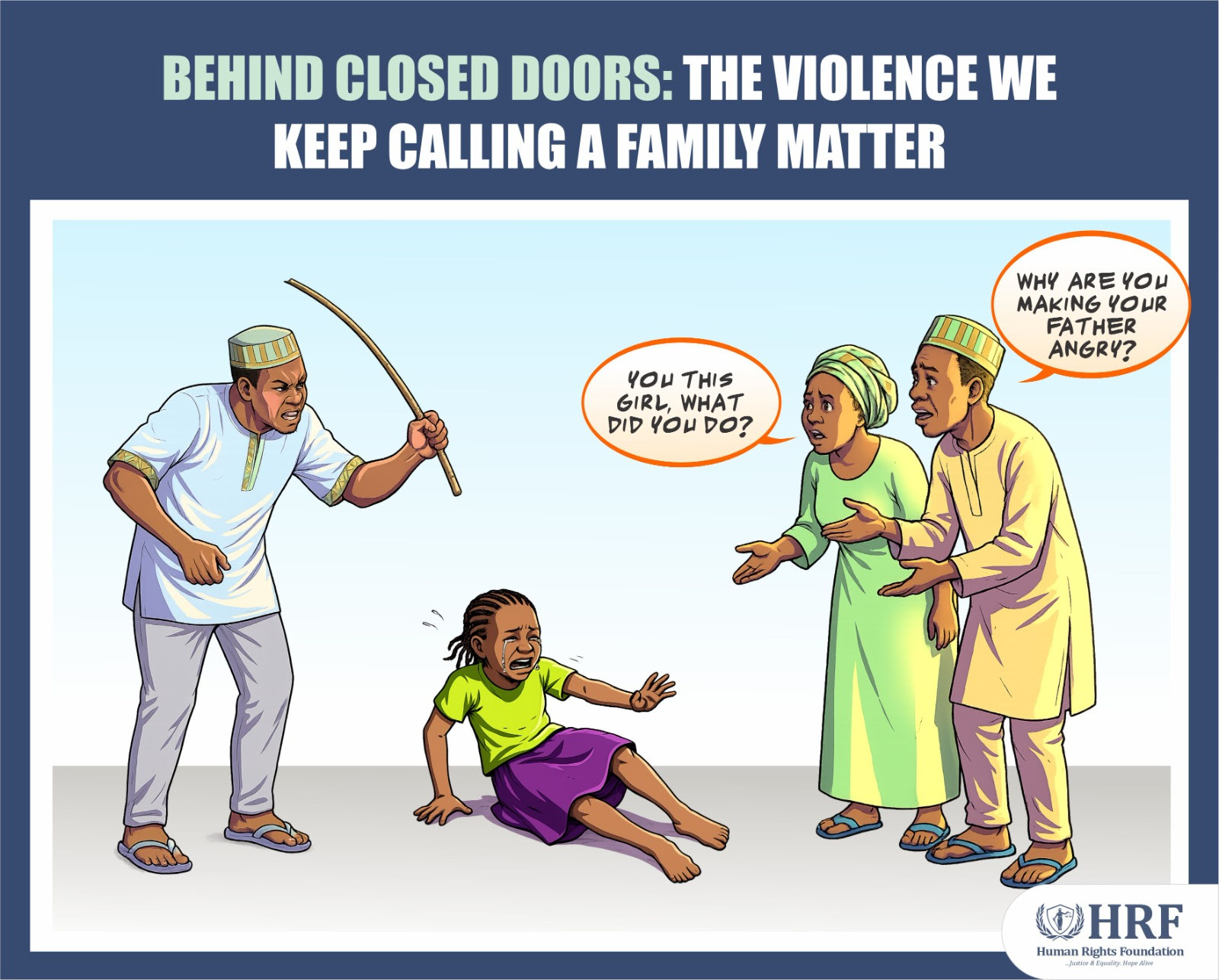
In Nigeria, Domestic violence often takes on a different name when it happens inside a family.
If a stranger hits a woman, many people know what to call it. But if the person accused is her father, husband, uncle, or older relative, the conversation quickly changes. People begin to ask what she did, how she spoke, whether she was respectful, whether she gave money, whether she forgot her roots, or whether she “pushed him too far.”
That is why the recent reports involving Ilebaye Odiniya (a former Big Brother Naija winner) and her father deserve more than gossip. On the surface, it may look like another celebrity family dispute. But beneath it is a wider social problem: “our tendency to explain away violence when it happens within the home.”
According to PUNCH, Ilebaye’s father reportedly spoke about feeling abandoned, disrespected, financially unsupported, and disappointed by some of her choices. He also reportedly admitted that he hit her, describing it as a reaction to provocation.
There may be a family history the public does not know about. There may be pain on both sides. A parent may feel neglected. A child may feel misunderstood. Money, fame, distance, and unresolved hurt can create deep family tension.
But none of these changes the central point: “violence remains violence, even when it happens at home.”
Under Nigerian law, the dignity of every person is protected. Section 34 of the 1999 Constitution guarantees the right to dignity of the human person and protects individuals from inhuman or degrading treatment. That right does not disappear because the person involved is someone’s daughter. It does not disappear inside a family home.
There is also the criminal law angle. Assault is not treated as a private family inconvenience. Under Section 351 of the Criminal Code, unlawfully assaulting another person is an offense. Where actual harm is caused, Section 355 provides for a more serious offense of assault occasioning harm.
And because this incident reportedly happened in Abuja, the Violence Against Persons (Prohibition) Act is also relevant. The VAPP Act was enacted to eliminate violence in both private and public life and to provide protection for victims of violence. In simple terms, the law recognizes that violence at home is still violence, and family relationships are not immune.
This is important because many people still confuse family authority with ownership. A parent may be hurt, expect respect, may feel disappointed by a child’s choices, but being a parent does not give anyone legal or moral permission to assault an adult child.
The public reaction to this matter also shows how easily society puts women on trial before it condemns the harm done to them. Instead of focusing on whether it was right for Ilebaye to be hit, many people have focused on whether she is a “good daughter.” A woman does not have to be modest, obedient, financially generous, or publicly approved to deserve safety. Her body is protected by law because she is a person, not because she meets society’s standard of respectability.
This is the lesson beyond one family dispute.
If we keep treating domestic violence as a “family matter,” we make it harder for victims to speak. We teach people that harm is only serious when it comes from a stranger. We also teach aggressors that family status can soften accountability. That is dangerous.
Families can disagree without violence. Parents can express pain without assault. Children can be corrected without being harmed. And where conflict becomes serious, the answer should be conversation, mediation, counseling, lawful complaint, or other peaceful intervention, not physical violence.
The Ilebaye matter should therefore not be reduced to entertainment. It should remind us that the home is not outside the law. Family ties do not cancel human dignity. And no matter how painful a disagreement may be, violence does not become acceptable because it comes from someone we are expected to respect.
Violence does not lose its name because it happened at home. It remains what it is.
.jpg)
0 Comments