
Contact Us
+2349014882100
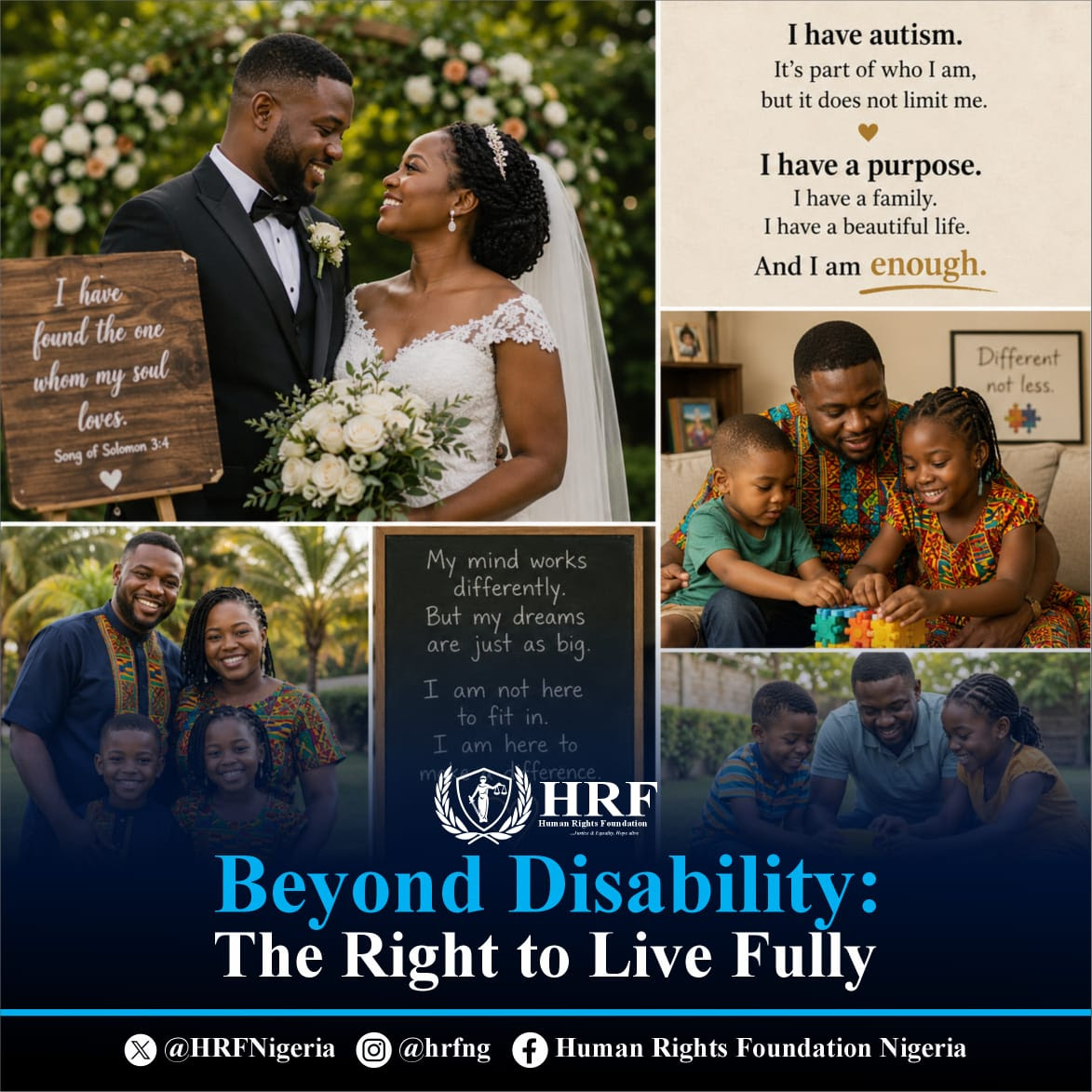
The ongoing debate surrounding the reported marriage involving Aboy Chibuzor, a young man living with autism, raises a difficult but important legal and moral question: Can persons living with intellectual or developmental disabilities truly enjoy the full dignity of family life, love, companionship, and marriage?
Much of the public commentary reported by Premium Times has focused almost exclusively on “capacity”, whether the young man possesses the mental ability to consent to marriage validly. Certainly, capacity remains a fundamental legal requirement in marriage jurisprudence. The law expects parties to understand the nature and consequences of the union they are entering. However, the conversation becomes incomplete and perhaps dangerous when society treats disability as automatic disqualification from social existence itself.
Modern human rights law has gradually moved away from the old, rigid doctrine that persons with intellectual disabilities must simply be excluded from major life decisions. Across progressive legal systems, there is increasing recognition of supported decision-making rather than absolute substitution or exclusion.
In simple terms, the fact that a person may require assistance, guidance, supervision, or family support in making decisions does not automatically strip such a person of the right to experience human relationships, emotional companionship, or even marriage itself.
The real legal question should not merely be: “Does he have perfect mental capacity?”
Rather, it should also be: “Can he, with proper support, protection, family guidance, and supervision, meaningfully participate in the institution of marriage?”
Persons living with disabilities are not lesser humans. They are entitled to dignity under the law and under the Constitution. Denying them every form of intimate social relationship simply because they are vulnerable risks reducing disability to what may be called a form of “civil death”, where the individual is alive physically but denied the ordinary experiences of humanity.
Of course, this does not mean exploitation should be tolerated. The law must remain vigilant against manipulation, coercion, abuse, or predatory conduct disguised as affection. Where there is evidence of exploitation, the State has both a moral and legal obligation to intervene.
But intervention must itself respect the humanity of the disabled person. Protection should not become oppression. Safeguarding vulnerability should not translate into permanently denying a person the right to love, companionship, emotional fulfillment, and social identity.
The rights of persons with disabilities include not only protection from abuse, but also inclusion in society. They deserve care, support, dignity, and, where possible, assisted participation in decisions affecting their lives. In the end, the issue is not merely about one marriage. It is about how society sees disability itself, whether as a condition deserving empathy and inclusion, or as a status that permanently excludes a person from basic human experiences.
And that is a conversation the law and society must approach with both caution and compassion.
.jpg)
0 Comments